
FREE CONSULTATIONS 630-352-2240
Naperville | Oak Brook | Burr Ridge | Lake Forest | St. Charles

-

- Home
- Firm Overview
- Attorneys
- Practice Areas
- Divorce Planning
- Divorce / Dissolution
- Alimony / Maintenance
- Child Support
- Child Custody / Parental Responsibilities
- Child Visitation / Parenting Time
- Special Needs Children & Divorce
- Contested Divorce & Uncontested Divorce
- Complex Divorce
- High Net Worth Divorce
- Divorce Involving Mental Health or Addiction Issues
- Property Valuation & Distribution
- Dissipation of Assets
- Inheritance Matters in Divorce
- Businesses & Divorce
- Post Decree Modifications
- Enforcing the Divorce Decree / Contempt Proceedings (Pre & Post Decree)
- Custodial Parent Removal / Relocation
- Family Law
- Mediation & Collaborative Law
- Blog
- Articles
- News
- Contact
Recent Blog Posts
How Long Do Spousal Maintenance Payments Last?
 In some divorce cases, one of the spouses is entitled to spousal maintenance, or alimony. Maintenance is typically ordered when one spouse is left at a significant financial disadvantage by divorce or when a valid prenuptial agreement stipulates spousal maintenance arrangements. Whether you are a payor or recipient of spousal maintenance, you may have many questions about how long payments will last. Spousal maintenance is often temporary, but there are some cases in which long term or permanent maintenance is ordered. Read on to learn more.
Spousal Support Laws in Illinois
When determining whether spousal maintenance is appropriate, Illinois courts consider several factors including but not limited to:
- The length of the marriage
- The standard of living established during the marriage
- Each spouse’s income and assets
- Each spouse’s present and future earning capacity
How Gray Divorces Are Impacting Adult Children
 The Baby Boomer generation has never been one to follow tradition and maintain the status quo. In past generations, it was often said that the longer your marriage lasted, the less likely you were to get a divorce. Today, things are quite different. A large number of older couples are choosing to divorce later in life, and the divorce rate of those 50 and older has doubled over just the past two decades. For those 60 and older, the divorce rate has tripled. This trend makes sense, however. Many older couples today find themselves with grown children out of the house and realize they are no longer happy in their marriage. It is never too late to take a step towards happiness. Gray divorces, however, do have their unique challenges, and baby boomers themselves are not the only group impacted. The millennial children of the baby boomer generation, most of them now adults, are also impacted by their parents decision to divorce. Changing family dynamics can be difficult for everyone involved, including adult children.
What Should I Do If My Child’s Other Parent Has Been Missing Child Support Payments?
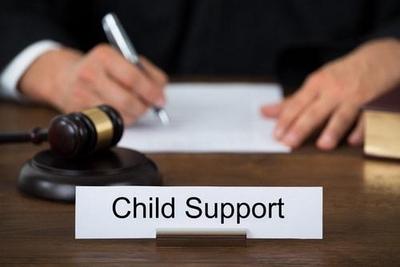 If you are a single parent entitled to child support, you have probably come to rely heavily on these funds. Whether it is child care, groceries, educational or extracurricular activities, or other costs, raising a child is expensive. When a parent does not receive his or her child support, it can be hard to make ends meet. Furthermore, child support orders are legally binding court orders. A parent cannot simply choose to stop payments. If a parent fails to meet his or her child support obligation, he or she can be charged with contempt of court and face other serious consequences.
Enforcing a Child Support Order
In order for a child support arrangement to be enforceable, it must be officially ordered by the court. If you and your child’s other parent had an informal child support arrangement, you will need to take the steps to establish a formal child support order. If the legal paternity of your child has not been established and you want to collect child support from your child’s father, you will need to establish paternity before you can collect child support.
What Is the Role of a Forensic Accountant in an Illinois Divorce Case?
 When a couple gets divorced, the terms of the divorce are largely dependent upon financial information. Illinois courts divide marital property according to equitable distribution, which means that each spouse is given a fair, but not always equal, portion of the marital estate based on their income, assets, employability, and other factors. Child support and spousal support payments are also based on the spouses’ income and assets. The more complex the spouses’ financial portfolios are, the more likely complications will arise during the divorce process.
Spouses who own complex assets are also more likely to attempt to hide assets or lie about finances in order to manipulate the divorce terms. If you are considering divorce and your financial situation is less than straightforward or you have concerns about hidden assets, a forensic accountant may be a valuable resource.
Examining Financial Data for Inconsistencies
Should I Voluntarily Acknowledge Paternity?
 Under Illinois law, the legal relationship between a child and his or her father is only presumed if the man was married to child’s mother at the time of, just prior to, or just after the child’s birth. According to the most recent available statistics from the Centers for Disease Control and Prevention, however, more than 40 percent of all births in the United States are to unmarried mothers. These numbers indicate that, on average, paternity cannot be presumed in about two out of five cases.
The most common method for establishing paternity when there is no existing presumption—or to rebut a presumption in certain cases—is by means of a voluntary acknowledgement of paternity (VAP) form. When both the mother and father complete the form properly, it creates a legal parent-child relationship between the man and his son or daughter. As such, completing the VAP form is an extremely serious matter, and one that should not be taken lightly.
Remembering the Most Overlooked Assets in Divorce
 If you and your spouse are headed for divorce, you know that you will be expected to divide your marital property between the two of you. While you may not know for sure how that will play out, you may already be thinking about who—if either of you—will keep the marital home, who will get which car, and how to split the household furniture. In the stress and confusion of the divorce process, however, you may be forgetting about a very important—and possibly very valuable—asset of which you may be entitled a portion. Experts say that retirement accounts are the most commonly overlooked assets in a divorce case.
Retirement Savings and Plans
Before marital property can be divided, both you and your spouse should provide one another with a full accounting of all of your assets and debts, even if you think he or she already knows about them. In some cases, this may require a few calls to old employers inquiring about the status of employer-funded retirement programs or plans. You may realize that you have forgotten about a 401(k) plan or similar account that was opened years ago. The same may be true for your spouse, and the money in such accounts, depending on when the accounts were funded, may be considered part of the marital estate.
When is DNA Testing Used to Establish Paternity in Illinois?
 If a woman in Illinois who is married to a man has a child, her husband is automatically presumed to be the child’s biological father. The father will not need to take additional action to establish himself as the child’s legal parent. When unmarried parents have a child together, the father is not automatically considered the legal father until he takes certain steps. Many people falsely assume that a father can gain legal parentage of a child by simply writing his name on the child’s birth certificate. However, before a father can be listed on a child’s birth certificate, he must establish paternity. Depending on the circumstances, DNA testing may be necessary to establish the biological relationship between a child and the child’s presumed father.
Establishing Legal Parentage of a Child
There are three ways that an Illinois parent can establish paternity. If both parents agree that the father is indeed the child’s biological father, the parents can sign a Voluntary Acknowledgement of Paternity (VAP) and file it with the Illinois Department of Healthcare and Family Services (HSF). The VAP form is typically available at the hospital when the baby is born, or it may be obtained through the HSF website, local child support office, County Clerk’s Office, or local Registrar’s office.
Living With Your New Partner Will Likely End Spousal Maintenance
 If you are receiving spousal maintenance, you probably know—or, at least, assume—that your former spouse’s financial obligations to you will end in that event you ever get remarried. It only makes sense. When you get remarried, you become financially interdependent with your new spouse, all but making your ex all but irrelevant—children’s needs notwithstanding. Depending on your situation and your desires, however, you may be inclined to shy away from marriage for a time after your divorce, as your last formal commitment may have soured you a bit on the institution. As an alternative to getting married, you may decide to move in with your new partner, but you should know that, in most cases, cohabitation is grounds for ending spousal maintenance as well.
Growing Trend
Evolving social mores and more liberal views on interpersonal relationships have led to an increasing number of unmarried couples living together. Many choose the arrangement as a precursor to marriage, while others are content to remain cohabiting indefinitely. While sociologists and religious authorities continue to debate the morality of cohabitation, legal systems around the country have been forced to contend with the changing concepts of household and family.
Family Law Mediation Allows You to Express Yourself
 As form of dispute resolution that is available in virtually every type of civil proceeding, mediation typically allows competing parties the opportunity to hammer out an agreement that reasonably meets the needs of everyone involved. This holds true in a large number of arenas, including personal injury concerns, business disputes, and, of course, divorce and family law. Perhaps the biggest advantage to seeking mediation in your divorce or child-related matter your ability to be clearly heard throughout the process, a luxury not necessarily afforded in many court-handled cases.
Strict Legal Guidelines
While the statutes regarding divorce and family law are constantly being updated to allow for more individual consideration, the fact of the matter is that a court can only do so much. A presiding judge is expected to take into account an ever-growing list of circumstantial considerations, which may include those related to each spouse and the children involved. To truly appreciate a family’s situation, a judge would need to review the case for hours and hours, discussing intimate details with each party, and doing so is clearly not a realistic expectation. Thus, court decisions are often based on a very limited understanding of the facts, and only those that each party remembers to include in presented documents.
How Can an Emergency Order of Protection Help Me?
 Being a victim of domestic violence can be a confusing and scary experience to endure. Victims may be uncertain of what their abuser is actually capable of or if the abuser will follow through with his or her threats. In many cases, a victim of domestic violence may be unsure as to whether or not the treatment he or she is being subjected to even “counts” as domestic violence. If you have been a victim of abuse by a household or family member, romantic partner, or ex-romantic partner, an emergency order of protection may benefit you in several ways.
What Is Considered Domestic Violence?
When most people think of domestic violence, they imagine physical abuse like punching, hitting, pushing, slapping, and kicking. However, this is not the only type of abuse that may be cause for acquiring an emergency order of protection. Domestic violence or abuse can also involve psychological or emotional manipulation. An abusive person may humiliate, demean, or frighten his or her victim in order to control him or her. The perpetrator may also threaten the victim or the victim’s loved ones. Some abusers control victims through financial means such as withholding money, prohibiting the victim from gaining employment, or controlling the victim’s spending to an extreme degree. One of the most important things to remember about abuse is that many abusers escalate the abusive behavior over time. If someone has made you feel afraid for your safety, an emergency protection order can help ensure that the situation does not worsen.









Naperville
50 S. Main Street, Suite 200, Naperville, Illinois 60540
 630-352-2240
Oak Brook
700 Commerce, Suite 500, Oak Brook, Illinois 60523
630-230-8985
Burr Ridge
1333 Burr Ridge Pkwy, Suite 200, Burr Ridge, IL 60527
630-230-1002
Lake Forest
By Appointment Only
847-457-0599
St. Charles
By Appointment Only
331-210-0063
Pay with Zelle
Send to phone number below
312-735-1975
x


Contact Our Firm
 The use of the Internet or this form for communication with the firm or any individual member of the firm does not establish an attorney-client relationship. Confidential or time-sensitive information should not be sent through this form.
I have read and understand the Disclaimer and Privacy Policy.